" width="398.52711421759466px"><path d="M 40.405 20.303 C 40.405 32.486 32.096 40.608 20.202 40.608 C 8.309 40.608 0 32.486 0 20.303 C 0 8.121 8.31 0 20.203 0 C 32.097 0 40.405 8.121 40.405 20.303 Z M 5.269 20.303 C 5.269 30.238 11.243 36.005 20.203 36.005 C 28.621 36.005 35.138 30.239 35.138 20.303 C 35.138 10.367 28.621 4.601 20.203 4.601 C 11.243 4.601 5.269 10.367 5.269 20.303 Z M 59.94 40.608 C 55.269 40.608 52.011 38.713 50.164 35.085 C 50.001 34.76 49.893 34.652 49.621 34.652 C 49.404 34.652 49.295 34.76 49.295 34.977 L 49.295 50.083 L 44.408 50.083 L 44.408 11.641 L 49.295 11.641 L 49.295 16.46 C 49.295 16.677 49.404 16.785 49.621 16.785 C 49.893 16.785 50.001 16.677 50.164 16.352 C 52.011 12.724 55.269 10.829 59.94 10.829 C 66.728 10.829 73.516 15.702 73.516 25.719 C 73.516 35.736 66.728 40.608 59.94 40.608 Z M 58.799 15.161 C 53.097 15.161 49.024 18.951 49.024 25.719 C 49.024 32.487 53.097 36.277 58.799 36.277 C 64.502 36.277 68.574 32.487 68.574 25.719 C 68.574 18.951 64.502 15.161 58.799 15.161 Z M 87.115 23.335 L 97.433 22.902 L 97.433 21.386 C 97.433 17.38 95.37 15.051 90.374 15.051 C 85.377 15.051 83.368 17.38 83.259 20.303 L 78.209 20.303 C 78.426 14.943 82.227 10.828 90.374 10.828 C 98.52 10.828 102.158 14.943 102.158 21.657 L 102.158 39.796 L 97.433 39.796 L 97.433 35.518 C 97.433 35.301 97.325 35.193 97.108 35.193 C 96.891 35.193 96.701 35.247 96.565 35.572 C 95.289 38.55 92.491 40.608 87.658 40.608 C 81.141 40.608 76.797 36.926 76.797 31.511 C 76.797 26.638 80.055 23.634 87.115 23.335 Z M 88.473 36.384 C 93.904 36.384 97.433 33.298 97.433 27.342 L 97.433 27.017 L 87.115 27.45 C 83.314 27.613 81.684 29.075 81.684 31.511 C 81.684 34.489 84.128 36.384 88.473 36.384 Z M 112.791 0.812 L 112.791 39.796 L 107.903 39.796 L 107.903 0.812 Z M 159.386 11.912 L 154.118 11.912 C 153.846 6.822 150.207 4.602 144.885 4.602 C 139.563 4.602 136.142 6.795 136.142 10.964 C 136.142 15.133 139.618 16.541 143.528 17.217 L 148.47 18.083 C 154.198 19.085 159.766 21.684 159.766 29.047 C 159.766 36.411 153.575 40.607 145.483 40.607 C 137.391 40.607 130.005 36.438 129.734 27.07 L 135.002 27.07 C 135.382 33.405 139.726 36.004 145.483 36.004 C 151.239 36.004 154.552 33.379 154.552 29.101 C 154.552 24.824 150.778 23.39 146.677 22.658 L 141.735 21.792 C 136.522 20.871 130.928 18.272 130.928 11.017 C 130.928 3.762 137.283 0 144.885 0 C 152.488 0 159.06 3.79 159.386 11.912 Z M 177.487 10.829 C 186.285 10.829 190.955 16.514 190.955 24.365 L 190.955 27.072 L 168.119 27.072 C 168.471 33.407 172.355 36.385 177.595 36.385 C 182.835 36.385 185.171 34.057 185.959 30.863 L 191.064 30.863 C 190.249 35.14 186.556 40.609 177.595 40.609 C 168.634 40.609 163.258 34.923 163.258 25.719 C 163.258 16.514 168.797 10.829 177.487 10.829 Z M 168.254 23.011 L 186.067 23.011 C 185.85 17.813 182.646 15.051 177.487 15.051 C 172.816 15.051 169.069 17.704 168.254 23.011 Z M 209.032 40.608 C 200.56 40.608 194.532 35.301 194.532 25.718 C 194.532 16.134 200.56 10.828 209.032 10.828 C 217.505 10.828 222.175 15.972 222.501 21.928 L 217.45 21.928 C 216.961 17.975 214.463 15.16 209.032 15.16 C 203.33 15.16 199.474 18.95 199.474 25.718 C 199.474 32.486 203.33 36.276 209.032 36.276 C 214.735 36.276 217.287 33.136 217.667 28.696 L 222.718 28.696 C 222.283 35.464 217.505 40.608 209.032 40.608 Z M 252.576 39.796 L 247.688 39.796 L 247.688 35.247 C 247.688 35.031 247.58 34.922 247.362 34.922 C 247.091 34.922 246.982 35.031 246.874 35.247 C 245.299 38.388 242.801 40.608 237.37 40.608 C 230.582 40.608 226.508 36.547 226.508 29.237 L 226.508 11.641 L 231.396 11.641 L 231.396 28.426 C 231.396 33.57 234.111 36.277 238.999 36.277 C 244.43 36.277 247.688 33.028 247.688 26.26 L 247.688 11.641 L 252.576 11.641 Z M 257.349 11.641 L 262.237 11.641 L 262.237 16.135 C 262.237 16.406 262.345 16.514 262.617 16.514 C 262.943 16.514 263.051 16.352 263.16 15.973 C 264.138 12.886 266.582 11.479 270.166 11.479 L 273.37 11.479 L 273.37 16.243 L 269.46 16.243 C 264.735 16.243 262.237 18.409 262.237 23.824 L 262.237 39.797 L 257.349 39.797 Z M 283.411 0.812 L 283.411 7.31 L 276.351 7.31 L 276.351 0.812 Z M 282.324 11.641 L 282.324 39.796 L 277.437 39.796 L 277.437 11.641 Z M 286.387 11.641 L 292.904 11.641 L 292.904 4.061 L 297.791 4.061 L 297.791 11.641 L 305.937 11.641 L 305.937 15.973 L 297.791 15.973 L 297.791 27.614 C 297.791 32.487 297.52 33.895 297.52 34.978 C 297.52 35.248 297.574 35.411 297.737 35.573 C 297.9 35.736 298.063 35.79 298.335 35.79 C 299.366 35.79 300.778 35.465 305.123 35.465 L 305.937 35.465 L 305.937 39.797 L 301.05 39.797 C 295.538 39.797 292.904 37.171 292.904 31.675 L 292.904 15.973 L 286.387 15.973 Z M 309.126 11.641 L 314.014 11.641 L 322.105 36.926 C 322.214 37.251 322.377 37.359 322.703 37.359 C 323.029 37.359 323.192 37.251 323.3 36.926 L 331.392 11.641 L 336.28 11.641 L 336.28 12.724 L 326.396 43.098 C 324.658 48.405 321.779 50.083 315.805 50.083 L 310.592 50.083 L 310.592 45.751 L 313.47 45.751 C 316.729 45.751 318.032 46.13 319.118 46.13 C 319.825 46.13 320.177 45.86 320.368 45.318 L 321.942 41.095 C 322.105 40.662 322.16 40.391 321.997 40.12 C 321.834 39.85 321.671 39.796 321.236 39.796 L 317.924 39.796 L 309.126 12.724 Z" fill="rgb(10, 10, 10)" height="50.08297px" id="JPfqUH7A0" transform="translate(62.247 2.362)" width="336.28px"/><path d="M 34.379 4.67 L 38.8 5.864 C 39.544 6.072 39.992 6.833 39.802 7.594 L 38.609 12.021 L 43.272 13.267 L 44.465 8.84 C 45.346 5.519 43.378 2.077 40.062 1.194 L 35.641 0 Z M 34.379 21.864 L 38.8 20.669 C 39.544 20.461 39.992 19.701 39.802 18.94 L 38.609 14.513 L 43.272 13.267 L 44.465 17.694 C 45.346 21.015 43.378 24.456 40.062 25.339 L 35.641 26.534 Z M 10.296 4.67 L 5.875 5.864 C 5.132 6.072 4.683 6.833 4.873 7.594 L 6.066 12.021 L 1.403 13.267 L 0.21 8.84 C -0.671 5.519 1.298 2.077 4.613 1.194 L 9.035 0 Z M 10.296 21.864 L 5.875 20.669 C 5.132 20.461 4.683 19.701 4.873 18.94 L 6.066 14.513 L 1.403 13.267 L 0.21 17.694 C -0.671 21.015 1.298 24.456 4.613 25.339 L 9.035 26.534 Z" fill="rgb(10, 10, 10)" height="26.533620000000006px" id="zWZ_X8UkP" transform="translate(0 9.005)" width="44.67541137134196px"/><path d="M 5.882 5.857 L 4.684 10.265 L 0 9.008 L 1.198 4.6 C 2.084 1.294 5.536 -0.669 8.866 0.21 L 13.307 1.399 L 17.747 0.21 C 21.078 -0.669 24.53 1.294 25.415 4.6 L 26.613 9.008 L 21.929 10.265 L 20.731 5.857 C 20.523 5.116 19.76 4.669 18.997 4.859 L 14.556 6.048 L 13.307 1.399 L 12.057 6.048 L 7.617 4.859 C 6.853 4.669 6.09 5.116 5.882 5.857 Z" fill="rgb(10, 10, 10)" height="10.265471865998371px" id="gGR5iJAni" transform="translate(9.03 0)" width="26.61318px"/><path d="M 4.684 0 L 5.882 4.408 C 6.09 5.149 6.853 5.596 7.617 5.407 L 12.057 4.218 L 13.307 8.867 L 14.556 4.218 L 18.997 5.407 C 19.76 5.596 20.523 5.149 20.731 4.408 L 21.929 0 L 26.613 1.258 L 25.415 5.666 C 24.53 8.972 21.078 10.935 17.747 10.056 L 13.307 8.867 L 8.866 10.056 C 5.536 10.935 2.084 8.972 1.198 5.666 L 0 1.258 Z" fill="rgb(10, 10, 10)" height="10.265663072325161px" id="Hf1v8vi7O" transform="translate(9.03 34.276)" width="26.61318px"/></g></g></svg>)
Security for AI Agents
Govern Agents the Same Way You Govern Humans
AI systems are requesting access, acting on behalf of users, and operating with credentials your security team never approved. Every new agent is an identity — with permissions, entitlements, and risk — but most organizations govern them with the same ad-hoc processes they use for service accounts: shared credentials, static roles, and no audit trail. Opal brings agent identities under the same policy framework, auditability, and enforcement as human identities, so your least-privilege posture doesn't have a blind spot shaped like an LLM.
Security for AI Agents
Govern Agents the Same Way You Govern Humans
AI systems are requesting access, acting on behalf of users, and operating with credentials your security team never approved. Every new agent is an identity — with permissions, entitlements, and risk — but most organizations govern them with the same ad-hoc processes they use for service accounts: shared credentials, static roles, and no audit trail. Opal brings agent identities under the same policy framework, auditability, and enforcement as human identities, so your least-privilege posture doesn't have a blind spot shaped like an LLM.
Security for AI Agents
Govern Agents the Same Way You Govern Humans
AI systems are requesting access, acting on behalf of users, and operating with credentials your security team never approved. Every new agent is an identity — with permissions, entitlements, and risk — but most organizations govern them with the same ad-hoc processes they use for service accounts: shared credentials, static roles, and no audit trail. Opal brings agent identities under the same policy framework, auditability, and enforcement as human identities, so your least-privilege posture doesn't have a blind spot shaped like an LLM.
Security for AI Agents
Govern Agents the Same Way You Govern Humans
AI systems are requesting access, acting on behalf of users, and operating with credentials your security team never approved. Every new agent is an identity — with permissions, entitlements, and risk — but most organizations govern them with the same ad-hoc processes they use for service accounts: shared credentials, static roles, and no audit trail. Opal brings agent identities under the same policy framework, auditability, and enforcement as human identities, so your least-privilege posture doesn't have a blind spot shaped like an LLM.
Get a Demo
See the Platform
TRUSTED BY LEADING COMPANIES
TRUSTED BY LEADING COMPANIES
TRUSTED BY LEADING COMPANIES
TRUSTED BY LEADING COMPANIES
The Problem
Your Identity Security Has a Blind Spot, and It's Growing Fast
AI agents are proliferating across the enterprise. Coding assistants write and deploy infrastructure. Workflow automations query databases and modify records. Customer-facing bots access production systems on behalf of users. Each one operates with credentials, requests access to resources, and acts with the authority of the identity it's been assigned. But almost none of them are governed the way human identities are. There's no JIT enforcement. No approval chain. No peer analysis. No audit trail that ties a specific action to a specific policy. The same security teams that spent years building least-privilege postures for human access are watching a new class of identity bypass it entirely.
Ungoverned by default
Most AI agents operate with static credentials and standing access — exactly the risk profile JIT was built to eliminate
No policy parity
Human access goes through approval chains and reviews; agent access is provisioned once and forgotten
Invisible to the graph
Agent identities often aren't represented in the access graph at all — making them impossible to query, audit, or revoke
The Problem
Your Identity Security Has a Blind Spot, and It's Growing Fast
AI agents are proliferating across the enterprise. Coding assistants write and deploy infrastructure. Workflow automations query databases and modify records. Customer-facing bots access production systems on behalf of users. Each one operates with credentials, requests access to resources, and acts with the authority of the identity it's been assigned. But almost none of them are governed the way human identities are. There's no JIT enforcement. No approval chain. No peer analysis. No audit trail that ties a specific action to a specific policy. The same security teams that spent years building least-privilege postures for human access are watching a new class of identity bypass it entirely.
Ungoverned by default
Most AI agents operate with static credentials and standing access — exactly the risk profile JIT was built to eliminate
No policy parity
Human access goes through approval chains and reviews; agent access is provisioned once and forgotten
Invisible to the graph
Agent identities often aren't represented in the access graph at all — making them impossible to query, audit, or revoke
The Problem
Your Identity Security Has a Blind Spot, and It's Growing Fast
AI agents are proliferating across the enterprise. Coding assistants write and deploy infrastructure. Workflow automations query databases and modify records. Customer-facing bots access production systems on behalf of users. Each one operates with credentials, requests access to resources, and acts with the authority of the identity it's been assigned. But almost none of them are governed the way human identities are. There's no JIT enforcement. No approval chain. No peer analysis. No audit trail that ties a specific action to a specific policy. The same security teams that spent years building least-privilege postures for human access are watching a new class of identity bypass it entirely.
Ungoverned by default
Most AI agents operate with static credentials and standing access — exactly the risk profile JIT was built to eliminate
No policy parity
Human access goes through approval chains and reviews; agent access is provisioned once and forgotten
Invisible to the graph
Agent identities often aren't represented in the access graph at all — making them impossible to query, audit, or revoke
The Problem
Your Identity Security Has a Blind Spot, and It's Growing Fast
AI agents are proliferating across the enterprise. Coding assistants write and deploy infrastructure. Workflow automations query databases and modify records. Customer-facing bots access production systems on behalf of users. Each one operates with credentials, requests access to resources, and acts with the authority of the identity it's been assigned. But almost none of them are governed the way human identities are. There's no JIT enforcement. No approval chain. No peer analysis. No audit trail that ties a specific action to a specific policy. The same security teams that spent years building least-privilege postures for human access are watching a new class of identity bypass it entirely.
Ungoverned by default
Most AI agents operate with static credentials and standing access — exactly the risk profile JIT was built to eliminate
No policy parity
Human access goes through approval chains and reviews; agent access is provisioned once and forgotten
Invisible to the graph
Agent identities often aren't represented in the access graph at all — making them impossible to query, audit, or revoke
How Opal Solves It
One Framework for Every Identity Type
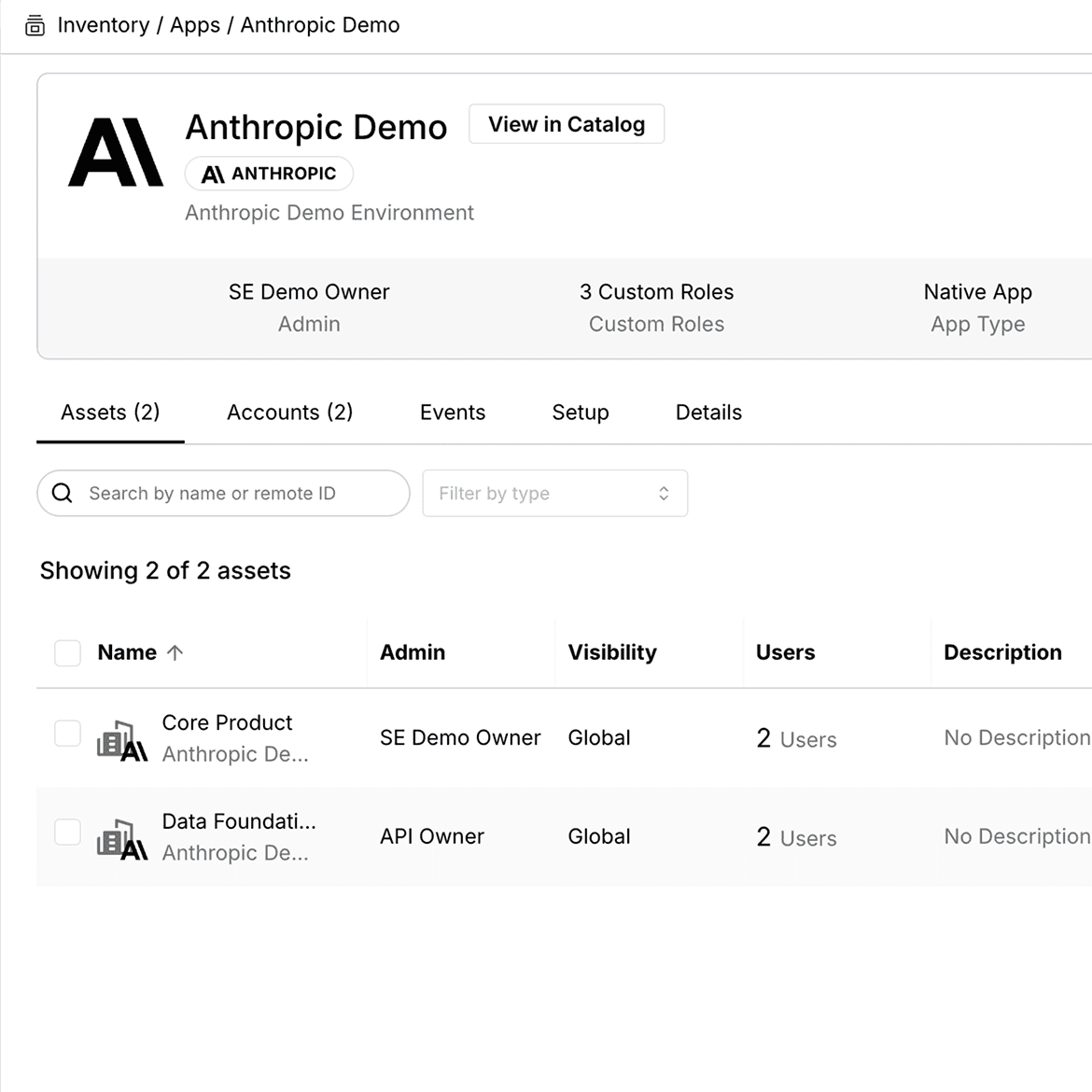
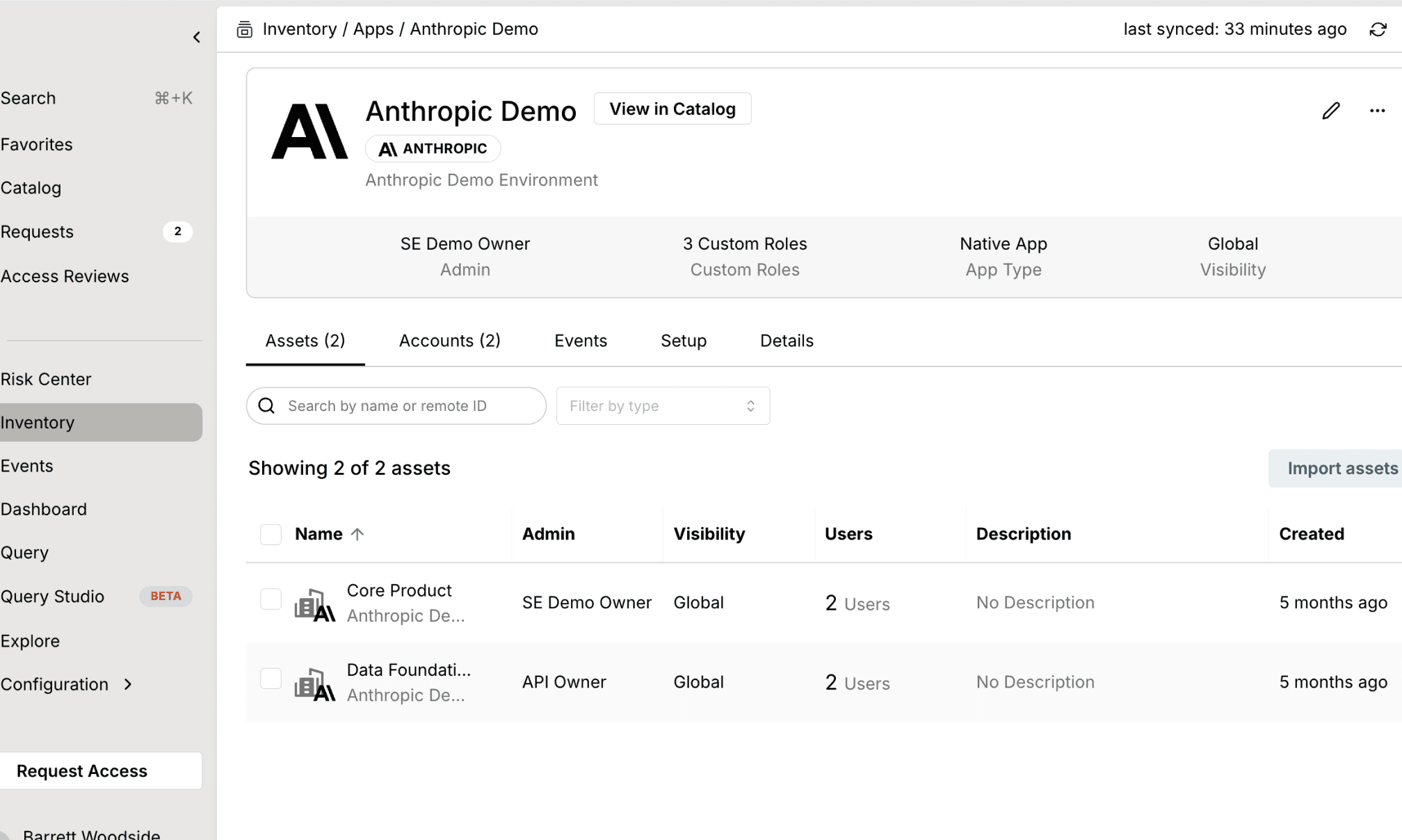
Opal doesn't treat agent identities as a special case. They're first-class entities in the same access graph, subject to the same OpalScript policies, evaluated by the same Paladin engine, and queryable through the same OpalQuery interface as human identities. When an AI agent requests access, it goes through the same approval chain — with the same contextual evaluation, time-bound enforcement, and audit trail — as a request from any employee. The security posture you've built for humans extends to agents automatically, not as a bolt-on.
Key Capabilities
1. Agent Identities in the Access Graph
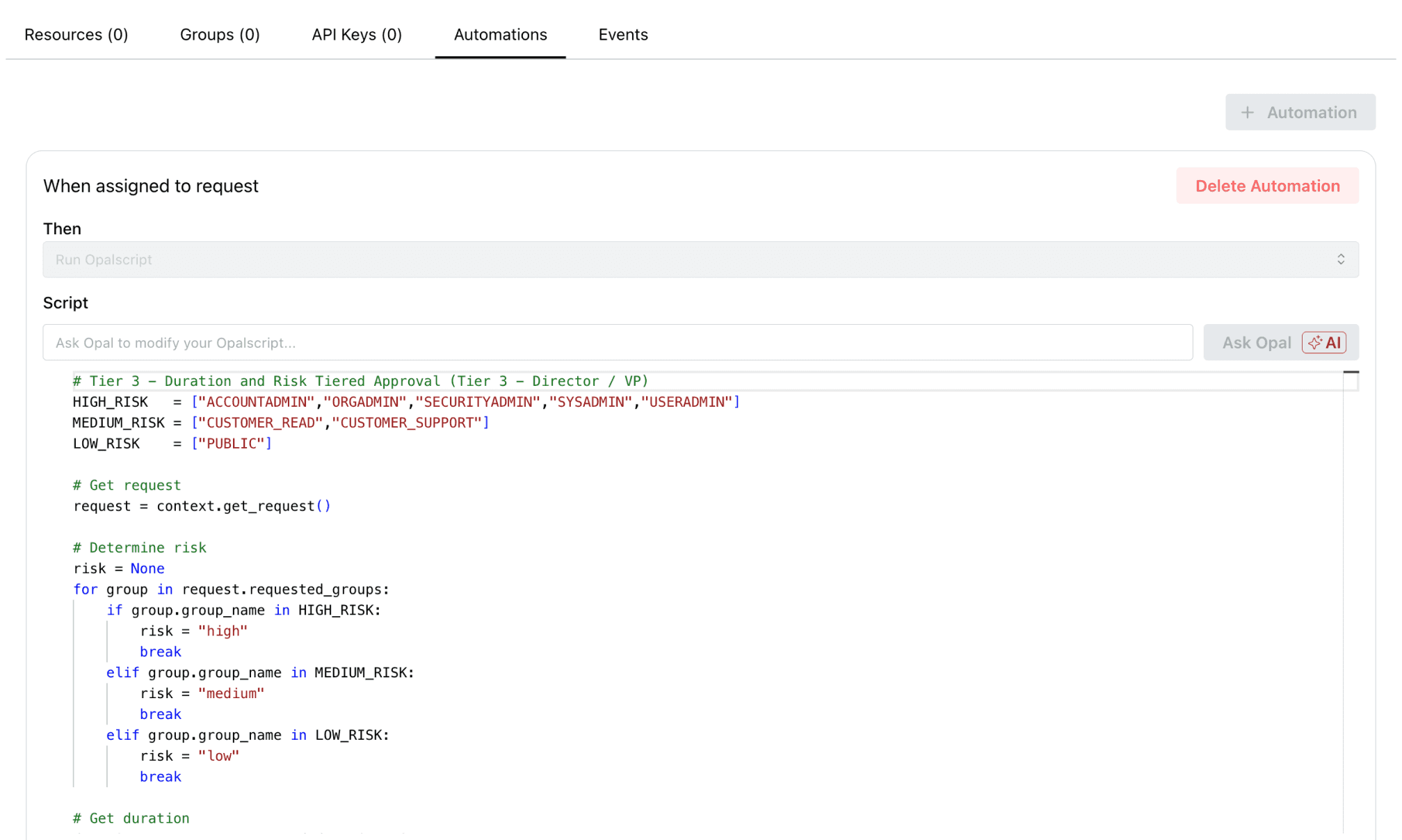
A Python-like language for encoding access policy as executable automations. Define approval workflows, JIT rules, SoD constraints, and break-glass logic in code that's version-controlled, testable, peer-reviewed, and composable. Write it by hand, or describe what you need and let AI generate it. Ships through Git, Terraform, and CI/CD — just like the rest of your infrastructure.
1. Agent Identities in the Access Graph
A Python-like language for encoding access policy as executable automations. Define approval workflows, JIT rules, SoD constraints, and break-glass logic in code that's version-controlled, testable, peer-reviewed, and composable. Write it by hand, or describe what you need and let AI generate it. Ships through Git, Terraform, and CI/CD — just like the rest of your infrastructure.
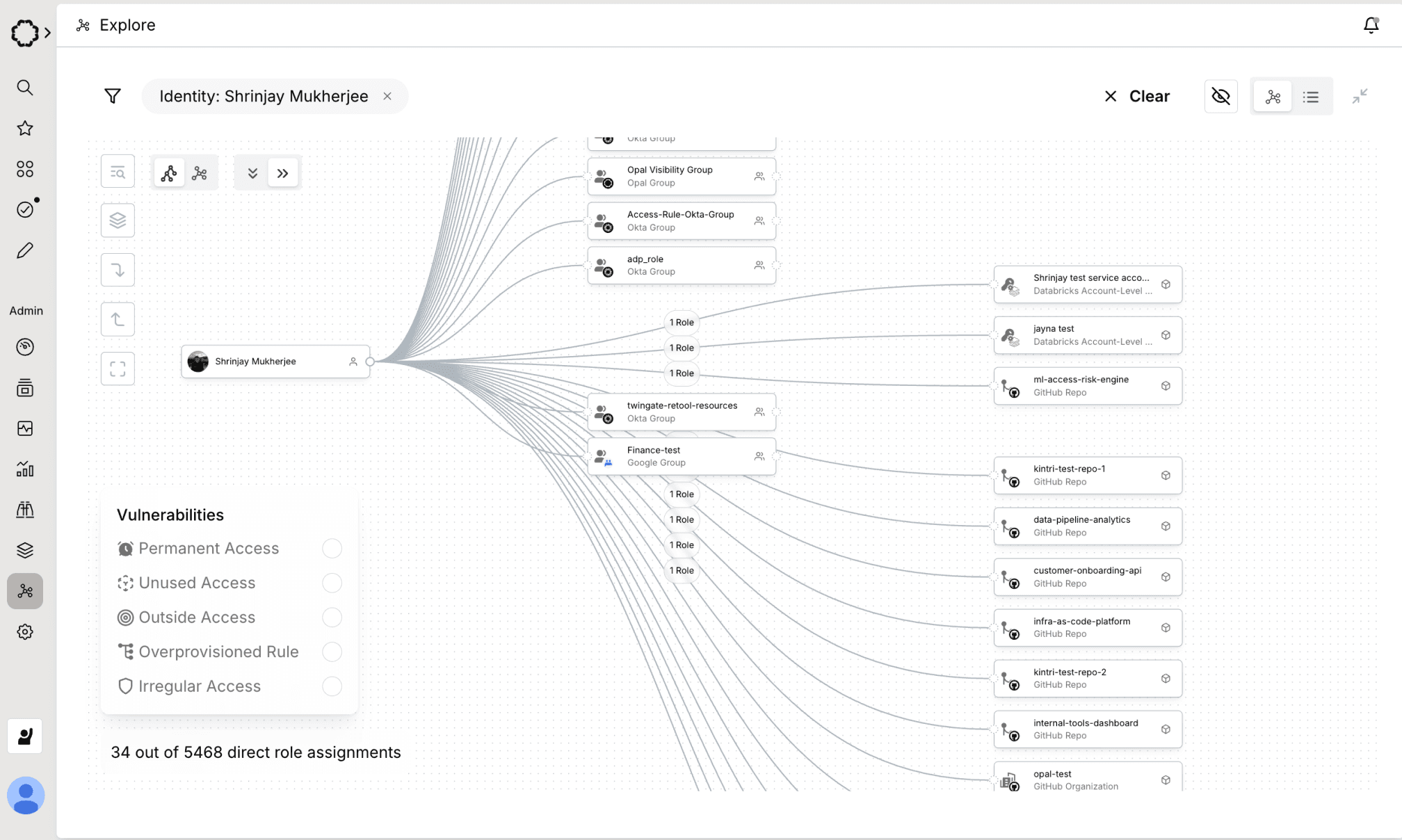
2. Policy Parity with OpalScript
The OpalScript policies you write for human access apply to agent identities without modification. JIT rules, approval workflows, SoD constraints, duration caps, and break-glass procedures govern agent access the same way they govern human access. Need different rules for agents? Write them — the same language, the same version control, the same deployment pipeline. Agent-specific policies like credential scopin
2. Policy Parity with OpalScript
The OpalScript policies you write for human access apply to agent identities without modification. JIT rules, approval workflows, SoD constraints, duration caps, and break-glass procedures govern agent access the same way they govern human access. Need different rules for agents? Write them — the same language, the same version control, the same deployment pipeline. Agent-specific policies like credential scopin
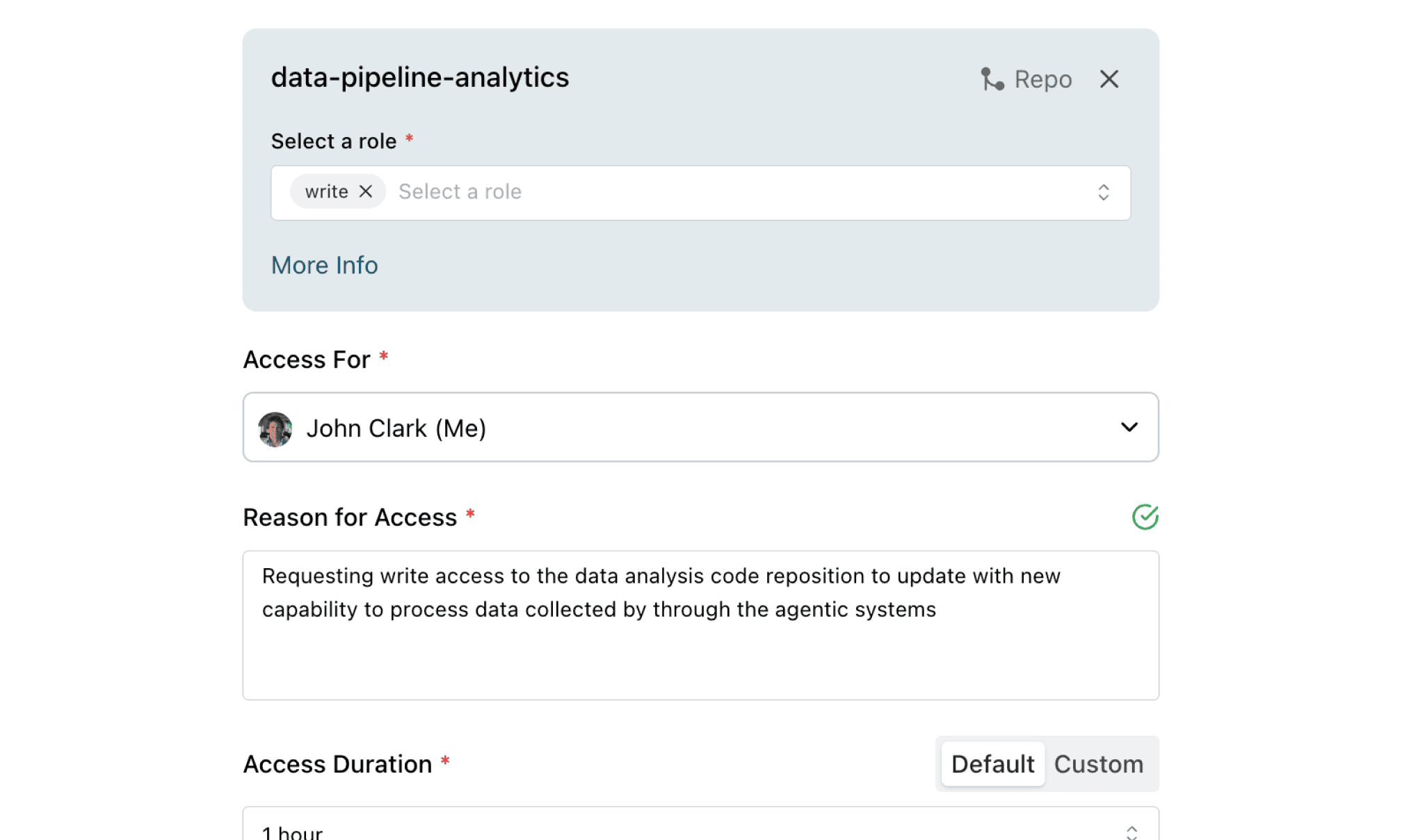
3. Paladin Evaluates Agent Requests
When an AI agent requests access, Paladin evaluates it with the same multi-signal investigation it applies to human requests — identity context, access history, resource sensitivity, policy compliance, and justification quality. Agents that request access with sufficient context and within policy bounds are approved. Agents that request sensitive access without adequate justification are escalated to a human reviewer with Paladin's reasoning attached. No rubber-stamping. No silent provisioning.
3. Paladin Evaluates Agent Requests
When an AI agent requests access, Paladin evaluates it with the same multi-signal investigation it applies to human requests — identity context, access history, resource sensitivity, policy compliance, and justification quality. Agents that request access with sufficient context and within policy bounds are approved. Agents that request sensitive access without adequate justification are escalated to a human reviewer with Paladin's reasoning attached. No rubber-stamping. No silent provisioning.
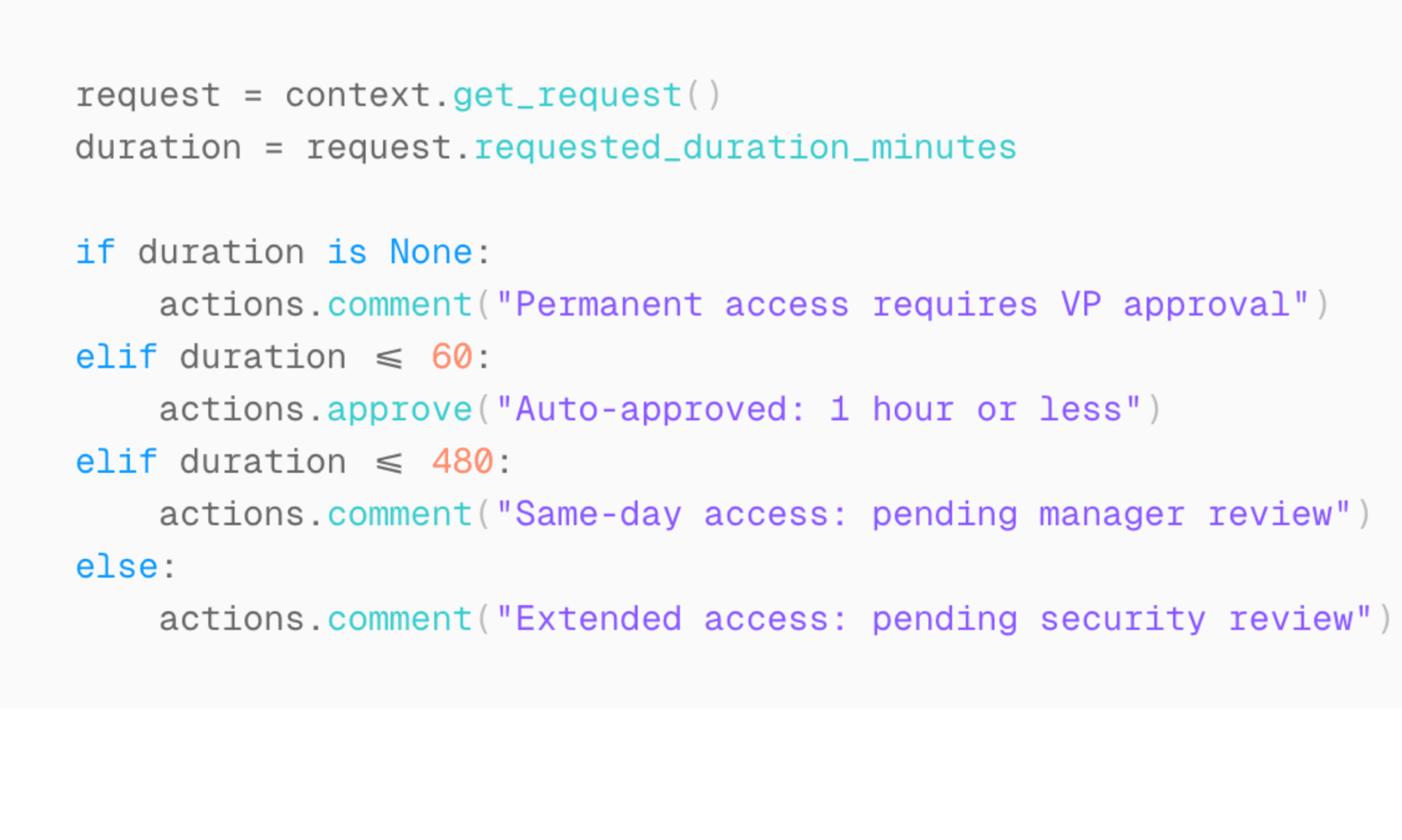
4. Time-Bound Agent Access by Default
Standing access for AI agents is the same risk as standing access for humans — arguably worse, because agents operate at machine speed and don't take vacations. Opal enforces JIT and time-bound access for agent identities by default. Credentials are scoped to a task. Access expires on completion. Long-running agents are subject to periodic re-evaluation. The attack surface from a compromised agent credential is bounded by the same duration and scope policies that govern human access.
4. Time-Bound Agent Access by Default
Standing access for AI agents is the same risk as standing access for humans — arguably worse, because agents operate at machine speed and don't take vacations. Opal enforces JIT and time-bound access for agent identities by default. Credentials are scoped to a task. Access expires on completion. Long-running agents are subject to periodic re-evaluation. The attack surface from a compromised agent credential is bounded by the same duration and scope policies that govern human access.
Impact
Trusted by security teams that ship fast and sleep well.

86K
Time-bound access requests
JIT Access and UARs Enhance Productivity and Security at Databricks
See customer story




Trusted by security teams that ship fast and sleep well.
86K
Time-bound access requests
JIT Access and UARs Enhance Productivity and Security at Databricks
See customer story
Trusted by security teams that ship fast and sleep well.
86K
Time-bound access requests
JIT Access and UARs Enhance Productivity and Security at Databricks
See customer story

5,353
Okta entitlements governed
How Mercari Built Zero-Touch Access to Production
See customer story


5,000
Employees secured
Blend Transforms Identity Security with Deterministic Logic
See customer story


150+
Apps under governance
Superhuman Reduced Access Risk While Improving End-User Experience
See customer story

Trusted by security teams that ship fast and sleep well.
86K
Time-bound access requests
JIT Access and UARs Enhance Productivity and Security at Databricks
See customer story
The Next Identity Crisis Is Already Here. Govern It Now.
AI agents are the fastest-growing identity type in your environment — and the least governed. Opal extends the same programmable, auditable, enforceable security posture you've built for humans to every agent identity in your organization. No blind spots. No bolt-ons. No second-class identities. Track and manage your employees usage of Anthropic, OpenAI, and Devin platforms today.
The Next Identity Crisis Is Already Here. Govern It Now.
AI agents are the fastest-growing identity type in your environment — and the least governed. Opal extends the same programmable, auditable, enforceable security posture you've built for humans to every agent identity in your organization. No blind spots. No bolt-ons. No second-class identities. Track and manage your employees usage of Anthropic, OpenAI, and Devin platforms today.
The Next Identity Crisis Is Already Here. Govern It Now.
AI agents are the fastest-growing identity type in your environment — and the least governed. Opal extends the same programmable, auditable, enforceable security posture you've built for humans to every agent identity in your organization. No blind spots. No bolt-ons. No second-class identities. Track and manage your employees usage of Anthropic, OpenAI, and Devin platforms today.
The Next Identity Crisis Is Already Here. Govern It Now.
AI agents are the fastest-growing identity type in your environment — and the least governed. Opal extends the same programmable, auditable, enforceable security posture you've built for humans to every agent identity in your organization. No blind spots. No bolt-ons. No second-class identities. Track and manage your employees usage of Anthropic, OpenAI, and Devin platforms today.
Stop Reviewing.
Start Enforcing.

Stop Reviewing.
Start Enforcing.
Stop Reviewing.
Start Enforcing.
Stop Reviewing.
Start Enforcing.